

SECONDARY & TERTIARY CRUSHING / RP-CC-300
Cone Crusher
Secondary and tertiary crushing for medium-hard and hard rock.
- Listed capacity
- 90–260 t/h
- Maximum feed
- 215 mm
Capacity depends on feed properties, feeding continuity and discharge setting. Confirm the final configuration for your site.
Request a configuration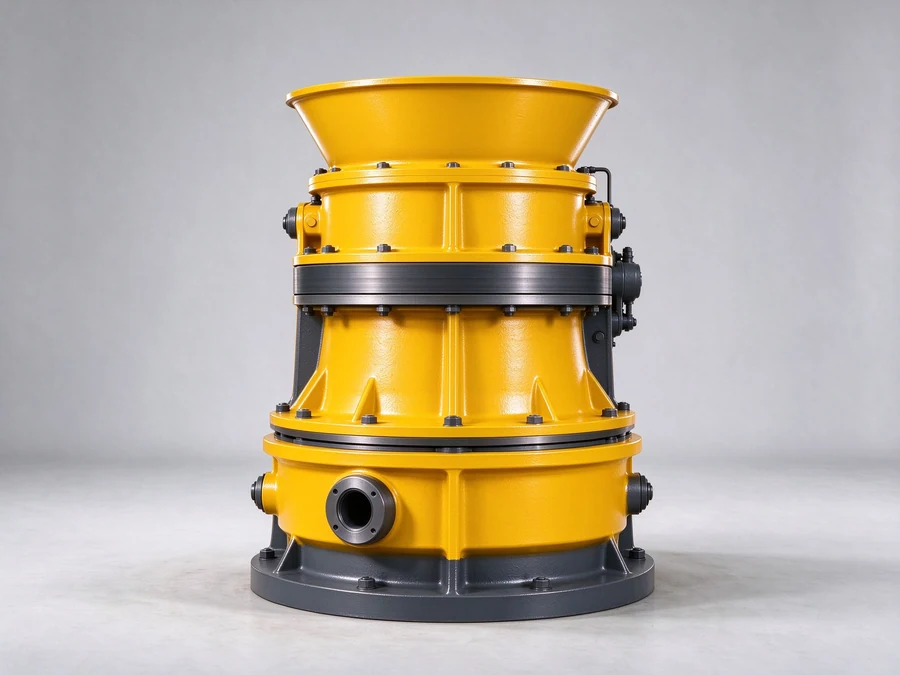
SECONDARY & TERTIARY CRUSHING
Secondary and tertiary crushing for medium-hard and hard rock.
The RP-CC-300 Cone Crusher handles secondary and tertiary reduction in metal mines and aggregate plants. Its laminated crushing chamber, hydraulic clearing, overload protection and adjustable eccentricity allow the crushing stage to be configured around the process requirements.
Features and operating benefits.
Laminated crushing chamber
Material is reduced through compression, supporting product shape control. Actual results depend on the feed, chamber selection and operating settings.
Hydraulic chamber clearing
Hydraulic clearing assists with retained material when used according to the operating procedure. Shutdown and isolation are required before clearing.
Overload protection and adjustable eccentricity
Overload protection addresses abnormal loading. Eccentricity should be matched to feed size and discharge requirements.
Labyrinth sealing
The sealing arrangement helps protect bearing areas. Maintain lubrication and inspect seals according to the operating manual.
Where it fits.
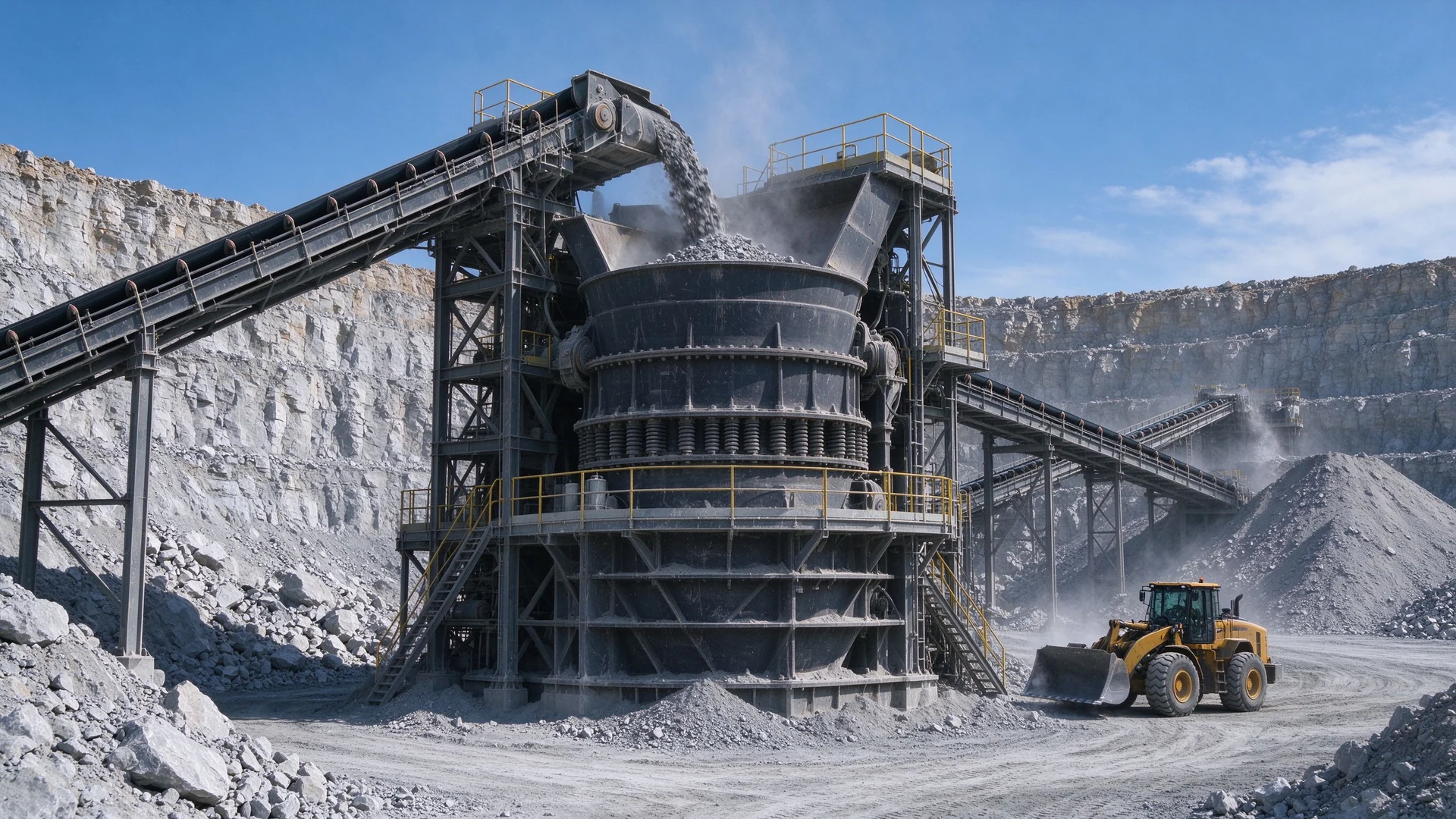
Applications include secondary ore crushing, fine crushing in hard-rock aggregate plants and feed preparation before further processing. Feed should be precrushed and remain within the specified limit. Review gradation, abrasiveness and target product requirements before selection.
Working principle & circuit integration.
Material enters the chamber, is compressed by the motion of the crushing cone and discharges below as its size is reduced. A typical circuit follows primary crushing with cone crushing and screening. Oversize may return to the crusher where a closed circuit is specified.
Engineering & installation interfaces.
PENDING CONFIRMATION
Site-specific drawings required
Dimensioned installation drawings, foundation loads, transport envelope, lifting points and interface dimensions have not been supplied for this preview. Obtain the approved drawing package before civil works or installation.
RP-CC-300 technical specifications.
| Parameter | Value |
|---|---|
| Cone large-end diameter | 1200 mm |
| Maximum feed size | 215 mm |
| Discharge range | 16–50 mm |
| Capacity | 90–260 t/h |
| Main motor power | 110 kW |
| Machine weight | Approx. 22 t |
Precrush the feed. Review moisture, chamber configuration, gradation, feeding and circulating load; screening determines finished grading.
Selection and operating conditions.
Provide hardness, abrasiveness, feed gradation after primary crushing, target throughput and the screening arrangement. The listed 90–260 t/h range depends on moisture, chamber configuration, feeding and circulating load. Discharge range does not replace a finished-product screening specification.
PENDING CONFIRMATION
Performance curves not supplied
No independent measured throughput curve or test report is supplied. Confirm site output, grading and final equipment settings for the project.
Prepare a useful equipment brief.
Review the material and complete process before choosing the equipment settings.
- Hardness, abrasiveness and feed gradation after primary crushing
- Target throughput, screening arrangement and circulating load
- Chamber selection, eccentricity and downstream feed requirements
- Project location, power and installation conditions
Packing, delivery & support.
Minimum order: 1 unit. Lead time: 30–45 days, subject to the agreed order schedule. Supplied with standard export packing; confirm shipping arrangements for the destination and transport dimensions. Installation drawings, an operating manual and remote technical guidance are available. On-site supervision and operator training can be arranged for the project.
Source-supplied conditions for discussion; confirm schedule, scope and shipping in the order.
Questions before you specify.
Can it replace a jaw crusher for large feed?
It is designed for secondary or tertiary duty, with a maximum feed size of 215 mm. Larger material requires upstream size reduction.
How do I obtain several finished sizes?
Use suitable screening equipment. Choose open or closed circuit operation according to the required gradation and plant capacity.
How is eccentricity selected?
Selection depends on material, feed distribution and discharge requirements. Use the approved technical proposal and operating instructions.
Project & qualification evidence.
PENDING CONFIRMATION
Evidence under review
No approved customer case, certificate original or independent test report is attached to this product record. Generic scene images must not be treated as project evidence.
Start with your material.
Share the material, maximum feed size, required capacity, finished sizes and project location. Include downstream equipment and power supply where available.
Prefer email? 18337606870@163.com
Form preview only. Online delivery is not connected. No information is sent.